

Modern life has changed faster than our bodies can adapt.
And one of the biggest consequences is something most people don’t even realize they’re dealing with:
Low-grade, ongoing inflammation.
It’s not always painful.
It’s not always obvious.
But it quietly affects how you feel, move, and function every day.
What Changed in Modern Life?
Inflammation isn’t new — it’s a natural part of how the body heals.
But today, the difference is simple:
It doesn’t switch off anymore.
We’re constantly exposed to small triggers that keep the body in a low-level inflammatory state:
- Processed and high-sugar foods
- Sedentary lifestyle and long sitting hours
- Chronic stress and poor sleep
- Environmental toxins and pollution
- Overstimulation of the immune system
Individually, these may seem harmless.
Together, they create a constant background load on the body.
Why Inflammation Is Linked to Modern Chronic Conditions
Inflammation itself is not the disease.
It’s the process behind many of them.
When inflammation becomes persistent, it can affect multiple systems over time:
- Heart and vascular health
- Joint and mobility function
- Metabolic balance and weight regulation
- Digestive system and gut comfort
- Energy levels and mental clarity
That’s why inflammation is often described as a common underlying factor in modern chronic conditions.
Post-COVID Reality: A New Layer of Inflammation
In recent years, many people have noticed something new:
Lingering, unexplained symptoms after illness
Even after recovery, some experience:
- Ongoing fatigue
- Reduced physical endurance
- Brain fog
- Increased sensitivity to stress
- Slower recovery from activity
While experiences vary, one common explanation discussed is:
A prolonged inflammatory response in the body
For many, this added another layer to an already inflammation-heavy lifestyle.
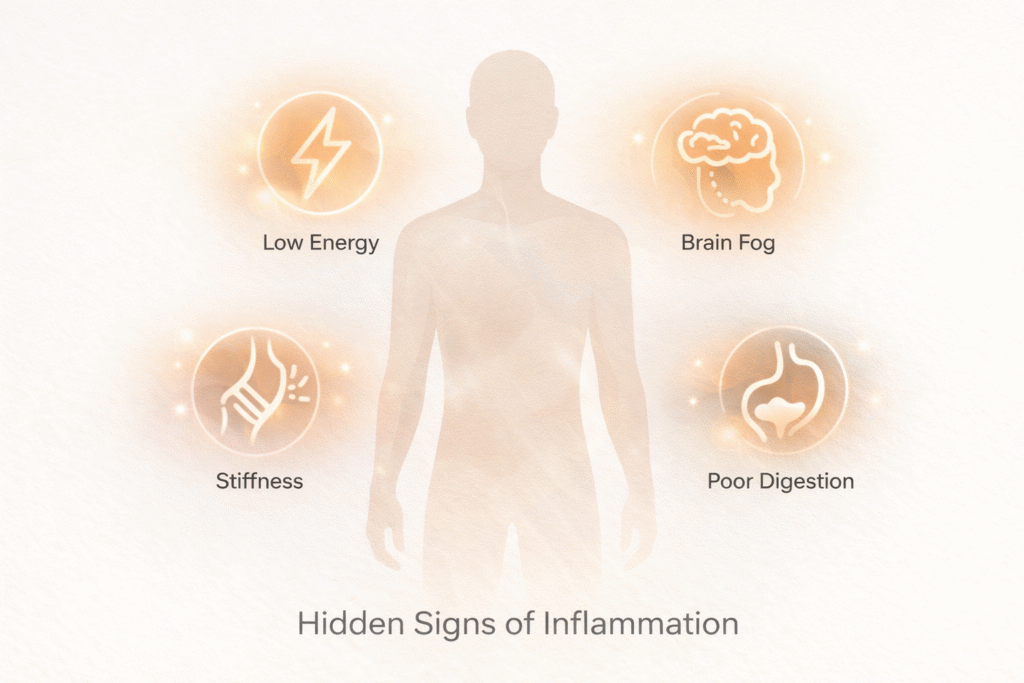
Signs You May Have Low-Grade Inflammation
Low-grade inflammation doesn’t always feel like illness.
It often shows up as small, persistent changes:
- Feeling stiff in the morning
- Mild swelling or “puffiness”
- Slower recovery after exercise
- Low or unstable energy
- Brain fog or reduced focus
- Digestive discomfort
- Gradual resistance to weight changes
These symptoms are easy to ignore — or normalize.
Why Most People Don’t Notice It
The biggest challenge with low-grade inflammation is that:
It builds slowly and feels familiar
There’s no clear starting point.
No dramatic signal.
Just a gradual shift in how your body feels.
Over time, “not feeling your best” becomes your baseline.
The First Step: Awareness
Understanding inflammation isn’t about fear — it’s about recognizing what your body is telling you.
Because once you see the pattern, you can start to:
- Reduce daily triggers
- Support your body’s natural balance
- And prevent long-term impact
What Comes Next?
Many people try to “fix” inflammation with one solution — a supplement, a diet change, or a short-term approach.
But if inflammation is ongoing and multi-layered, why do simple solutions often fall short?
In the next article, we’ll explore:
Why inflammation comes back — even when you try to address it.
Start Supporting Your Body Today
Small changes can make a big difference when done consistently.
Explore targeted approaches designed to support inflammation at multiple levels:
