Free standard shipping for orders over $340.

Why Inflammation Requires a Multi-Layered Approach

If you’ve ever tried to manage inflammation with just one solution — you’ve likely noticed something:

  • It helps… but not completely.
  • Or it works… but only temporarily.

That’s because inflammation is not one process.

It’s a system-wide, multi-step cycle.

And to truly support it, your approach needs to match that complexity.

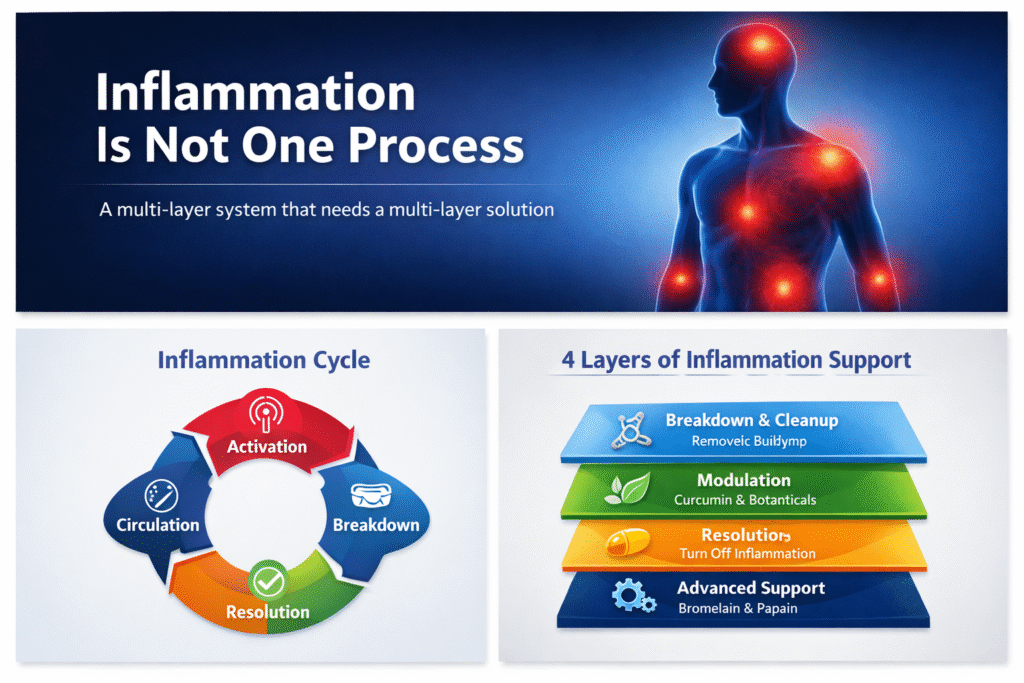
Inflammation Is Not One Thing

Most people think of inflammation as a single issue.

But inside the body, it involves multiple phases happening together:

  • Activation
  • Circulation
  • Breakdown
  • Resolution

Each of these plays a different role.

If even one part is unsupported, the cycle may continue.

The 4 Key Layers of Inflammation Support

To manage inflammation effectively, your body needs support at multiple levels:

  1. Breakdown & Cleanup (Proteolytic Activity)

Over time, inflammatory byproducts can accumulate in tissues.

This can contribute to:

  • Stiffness
  • Slower recovery
  • That “heavy” or “inflamed” feeling

Proteolytic enzymes help support the body’s natural cleanup processes.

Especially when taken on an empty stomach for systemic effect.

  1. Modulation (Balancing the Response)

Inflammation is not always bad — but it can become overactive.

Certain compounds help:

  • Support a more balanced inflammatory response
  • Reduce excessive signaling

This is where botanical compounds like curcumin play a key role

  1. Resolution (Turning It Off Properly)

One of the most overlooked steps is:

  • Ending inflammation

The body must actively switch from: “defense mode” → “recovery mode”

  • Nutrients like omega-3 fatty acids help support this transition at a cellular level
  1. Deeper Enzymatic Support (Advanced Layer)

For more persistent or higher-load inflammation:

– Additional enzyme support may help:

  • Enhance breakdown processes
  • Support circulation
  • Assist tissue-level recovery

This is where compounds like:

  • Bromelain
  • Papain
  • Additional proteases

can provide a stronger, layered effect

Why Timing Matters More Than You Think

How you take supplements can change how they work.

For example:

  • Empty stomach → systemic effect
  • With meals → digestive support

This distinction is critical for enzymes.

Proper timing helps shift them from digestion → full-body support

Why a Single Ingredient Is Often Not Enough

Many people rely on just one solution:

  • Only turmeric
  • Only omega-3
  • Only enzymes

But inflammation is not a single pathway.

Supporting only one layer often leads to:

  • Partial results
  • Short-term relief
  • Recurring symptoms

Who Benefits Most from a Multi-Layered Approach?

This type of support is especially relevant if you:

  • Feel ongoing low-level inflammation
  • Experience slow recovery after activity
  • Are over 35–40 and noticing gradual changes
  • Have a high-stress or sedentary lifestyle
  • Want a more complete, long-term approach

A Smarter Way to Think About Inflammation

Instead of asking:

“What should I take?”

Start thinking:

“Which part of the inflammation process needs support?”

Because real progress comes from:

  • Supporting the system
  • Not just reacting to symptoms

Bringing It All Together

A multi-layered approach helps:

  • Support natural cleanup processes
  • Balance inflammatory signaling
  • Assist resolution and recovery
  • Provide deeper support when needed

This is how you move from temporary relief to more consistent, long-term support

Take the Next Step

If you’re ready to approach inflammation more completely:

Explore Amvilab Anti-Inflammatory Bundles

Designed to support multiple layers of inflammation — not just one.
We Live in an Inflammation Era — Here’s Why

Modern life has changed faster than our bodies can adapt.

And one of the biggest consequences is something most people don’t even realize they’re dealing with:

Low-grade, ongoing inflammation.

It’s not always painful.

It’s not always obvious.

But it quietly affects how you feel, move, and function every day.

What Changed in Modern Life?

Inflammation isn’t new — it’s a natural part of how the body heals.

But today, the difference is simple:


It doesn’t switch off anymore.

We’re constantly exposed to small triggers that keep the body in a low-level inflammatory state:

  • Processed and high-sugar foods
  • Sedentary lifestyle and long sitting hours
  • Chronic stress and poor sleep
  • Environmental toxins and pollution
  • Overstimulation of the immune system

Individually, these may seem harmless.

Together, they create a constant background load on the body.


Why Inflammation Is Linked to Modern Chronic Conditions

Inflammation itself is not the disease.

It’s the process behind many of them.

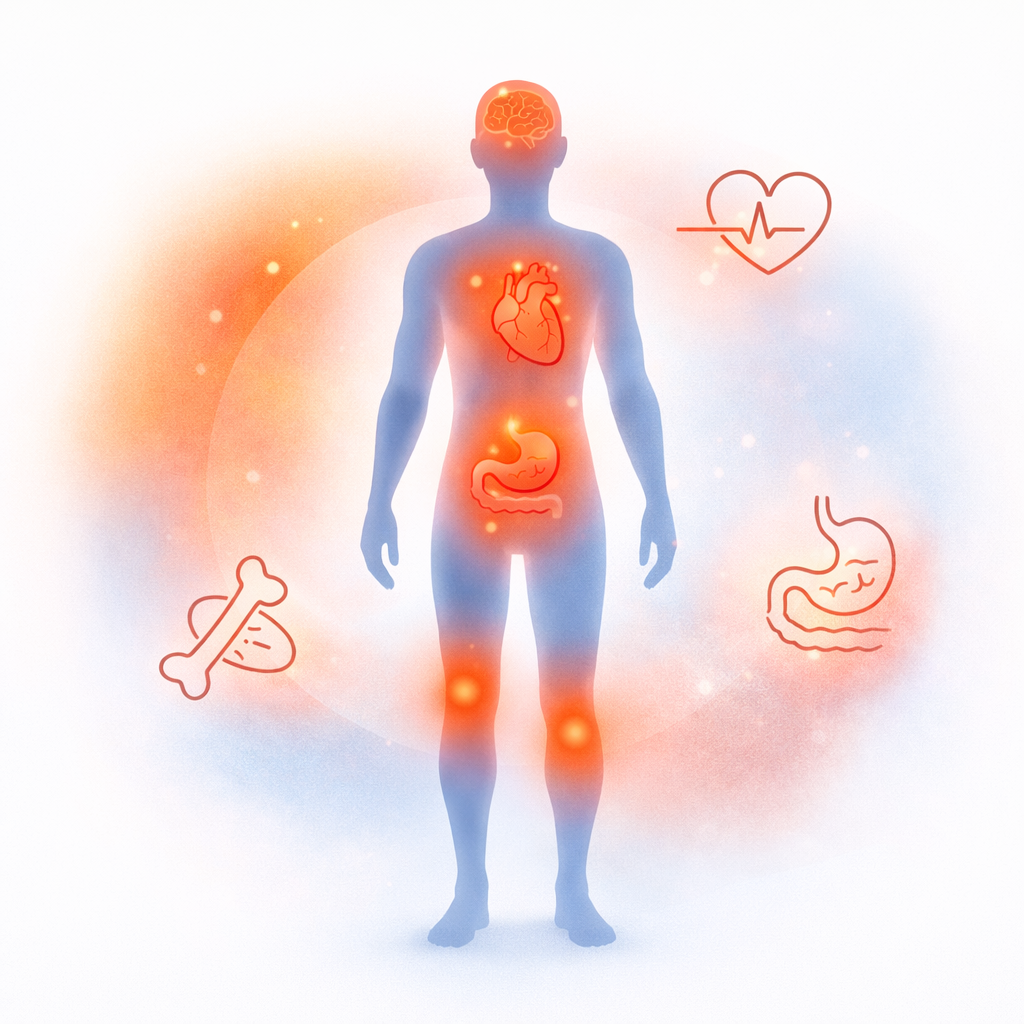
When inflammation becomes persistent, it can affect multiple systems over time:

  • Heart and vascular health
  • Joint and mobility function
  • Metabolic balance and weight regulation
  • Digestive system and gut comfort
  • Energy levels and mental clarity

That’s why inflammation is often described as a common underlying factor in modern chronic conditions.


Post-COVID Reality: A New Layer of Inflammation

In recent years, many people have noticed something new:

Lingering, unexplained symptoms after illness

Even after recovery, some experience:

  • Ongoing fatigue
  • Reduced physical endurance
  • Brain fog
  • Increased sensitivity to stress
  • Slower recovery from activity

While experiences vary, one common explanation discussed is:

A prolonged inflammatory response in the body

For many, this added another layer to an already inflammation-heavy lifestyle.


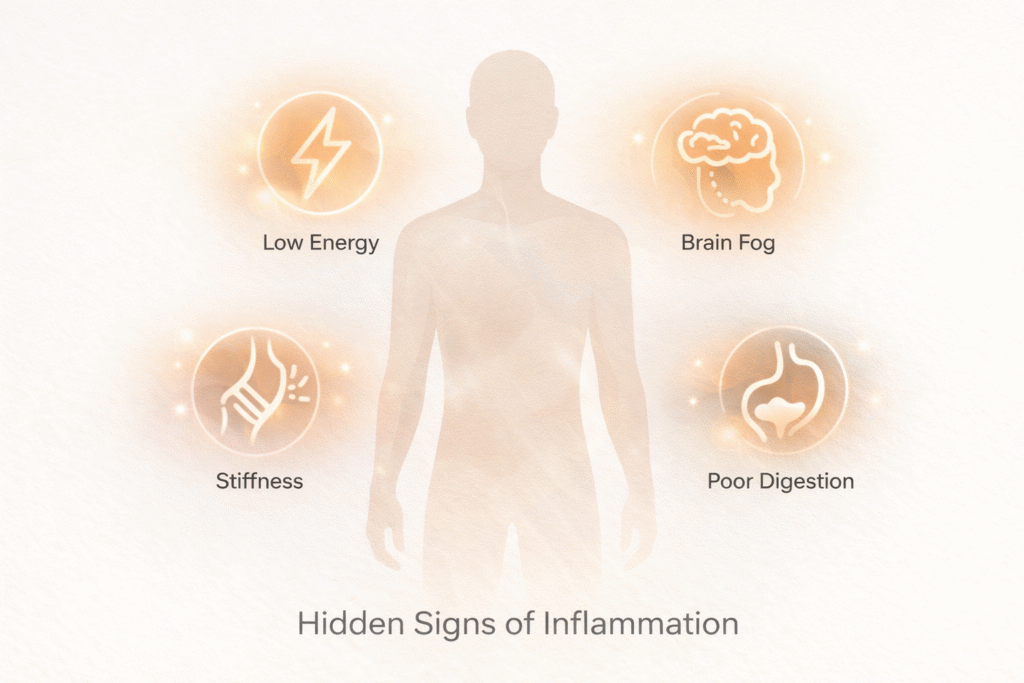
Signs You May Have Low-Grade Inflammation

Low-grade inflammation doesn’t always feel like illness.

It often shows up as small, persistent changes:

  • Feeling stiff in the morning
  • Mild swelling or “puffiness”
  • Slower recovery after exercise
  • Low or unstable energy
  • Brain fog or reduced focus
  • Digestive discomfort
  • Gradual resistance to weight changes

These symptoms are easy to ignore — or normalize.


Why Most People Don’t Notice It

The biggest challenge with low-grade inflammation is that:

It builds slowly and feels familiar

There’s no clear starting point.

No dramatic signal.

Just a gradual shift in how your body feels.

Over time, “not feeling your best” becomes your baseline.


The First Step: Awareness

Understanding inflammation isn’t about fear — it’s about recognizing what your body is telling you.

Because once you see the pattern, you can start to:

  • Reduce daily triggers
  • Support your body’s natural balance
  • And prevent long-term impact

What Comes Next?

Many people try to “fix” inflammation with one solution — a supplement, a diet change, or a short-term approach.

But if inflammation is ongoing and multi-layered, why do simple solutions often fall short?

In the next article, we’ll explore:

Why inflammation comes back — even when you try to address it.

Start Supporting Your Body Today

Small changes can make a big difference when done consistently.

Explore targeted approaches designed to support inflammation at multiple levels:

Discover Amvilab Anti-Inflammatory Bundles.

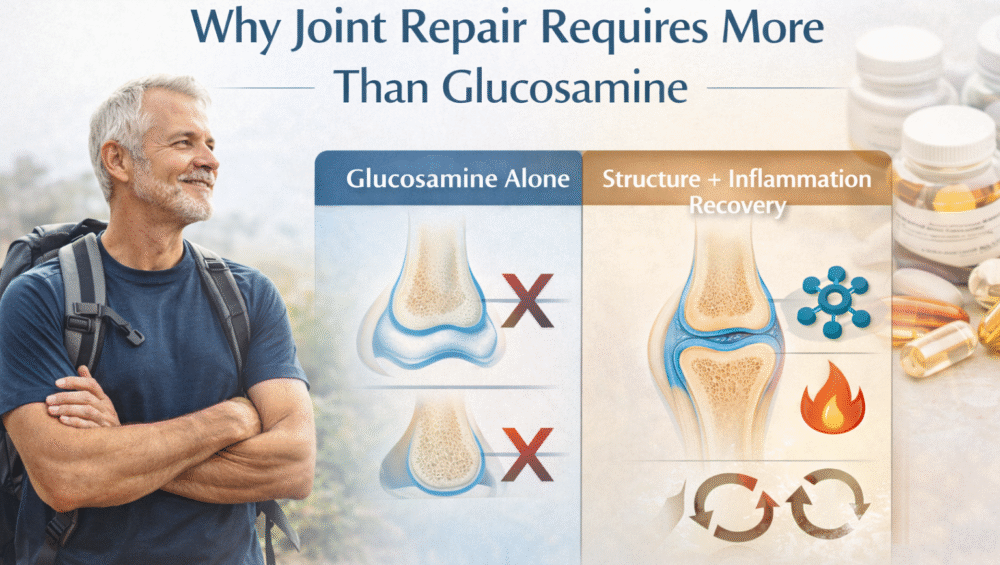
Why Joint Repair Requires More Than Glucosamine

Glucosamine is one of the most recognized joint supplements — yet many people take it for months with little improvement.

This doesn’t mean glucosamine doesn’t work.

It means joint repair is more complex than cartilage building alone.

The Limits of Single-Ingredient Support

Cartilage repair depends on more than raw materials. It requires:

  • Controlled inflammation
  • Good circulation
  • Removal of inflammatory debris
  • Time and consistency

Without these, nutrients can’t fully do their job.

Inflammation Blocks Repair

Chronic inflammation interferes with cartilage metabolism and tissue healing. Even high-quality joint nutrients may underperform if inflammation remains unresolved.

The Importance of Cleanup & Circulation

Inflammatory proteins and fibrin can accumulate around joints, limiting nutrient delivery. Proteolytic enzymes help support cleanup and circulation — creating a better environment for repair.

Regeneration Is a Process, Not a Pill

True joint repair happens gradually. It requires:

  • Structural support
  • Inflammation resolution
  • Ongoing recovery support

How Amvilab Supports Joint Repair

The Joint Repair & Regeneration Kit combines:

  • Cartilage nutrients (glucosamine, chondroitin, MSM)
  • Inflammation modulation (curcumin, omega-3)
  • Enzyme-based cleanup and recovery

Because rebuilding joints means supporting the whole system.

What Happens When You Stop Taking Care of Yourself: Early Warning Signs to Never Ignore

Your Body Always Sends Early Alerts

People ignore symptoms until they become problems.

These warning signs matter:

  • Constant fatigue
  • Bloating / digestive issues
  • Trouble sleeping
  • Irritability
  • Joint stiffness
  • Weight gain
  • Brain fog
  • Low motivation
  • Heart palpitations
  • Inflammation-based pain

These aren’t “normal.” They’re signals.

What These Symptoms Really Mean

  • Nutrient deficiencies
  • Gut imbalance
  • Poor metabolic function
  • Chronic inflammation
  • Hormone disruption
  • Stress overload
  • Early immune weakness

Small Daily Habits Make the Biggest Difference

  • Walk daily
  • Hydrate
  • Reduce sugar
  • Sleep 7–8 hours
  • Take targeted supplements
  • Support gut health
  • Manage stress
  • Anti-inflammatory foods

Amvilab Tools for Getting Back on Track

Choose based on your symptoms:

Your body recovers quickly when given the right support.

Cartilage, Synovial Fluid & Inflammation: What Joints Really Need

When people think about joint health, they usually think about cartilage. But cartilage alone does not determine how your joints feel or function.

Healthy joints depend on three interconnected systems:

  • Cartilage structure
  • Synovial fluid lubrication
  • Inflammation balance

Ignoring any one of these limits recovery.

Cartilage: Structure Without Sensation

Cartilage acts as a shock absorber. Interestingly, cartilage itself has no nerves — which means pain usually comes from surrounding tissues, not cartilage directly.

This explains why joint pain can exist even when cartilage loss is minimal.

Synovial Fluid: The Forgotten Component

Synovial fluid nourishes cartilage and reduces friction. Poor lubrication leads to:

  • Stiffness
  • Grinding sensations
  • Reduced range of motion

Hyaluronic acid, hydration, and inflammation balance all affect synovial fluid quality.

Inflammation: The Accelerator of Joint Wear

Inflammation speeds up cartilage breakdown and interferes with synovial fluid production. Over time, this creates a vicious cycle:

inflammation → friction → tissue stress → more inflammation

Breaking this cycle is key.

A Systems-Based Joint Support Approach

Effective joint support must:

  • Calm inflammation
  • Support lubrication
  • Provide structural nutrients
  • Improve recovery

How Amvilab Approaches Joint Support

Amvilab’s joint formulations combine:

  • Structural nutrients (glucosamine, chondroitin, collagen)
  • Lubrication support (hyaluronic acid)
  • Inflammation modulators (curcumin, omega-3)
  • Enzyme-based recovery support

Because joints don’t work in isolation — and neither should joint support.

Why Joint Pain Starts Before X-Rays Show Damage

Many people experience joint stiffness, discomfort, or reduced mobility long before any visible damage appears on X-rays or scans. This often leads to confusion — “If nothing is damaged, why do my joints hurt?”

The answer is simple but often overlooked: joint pain usually begins at a functional and inflammatory level, not a structural one.

Joints Are Living Systems, Not Hinges

Joints are dynamic structures made up of cartilage, synovial fluid, connective tissue, blood supply, and nerves. Even small imbalances in these systems can affect how joints feel and move.

Early joint discomfort is often driven by:

  • Low-grade inflammation
  • Reduced lubrication
  • Micro-injuries from daily load
  • Slower tissue recovery

These changes don’t show up on imaging — but your body feels them.

The Role of Low-Grade Inflammation

Daily activities, repetitive movement, exercise, poor posture, or excess body weight can all create micro-inflammation around joints. Over time, this leads to stiffness, reduced flexibility, and discomfort — especially in the morning or after activity.

Unlike acute inflammation, this process is slow and silent.

Lubrication Matters More Than You Think

Healthy joints rely on synovial fluid to move smoothly. When lubrication decreases, friction increases — making joints feel tight, creaky, or uncomfortable even without cartilage damage.

Hydration, nutrients, and inflammation balance all influence joint lubrication.

Why Early Support Matters

Waiting until pain becomes severe often means structural damage has already progressed. Supporting joints early helps:

  • Maintain mobility
  • Reduce stiffness
  • Support daily recovery
  • Protect long-term joint health

How Amvilab Supports Early Joint Health

The Joint Motion & Recovery Kit is designed for this early phase. It supports:

  • Inflammation balance
  • Joint lubrication
  • Tissue recovery
  • Everyday mobility

Because joint health starts long before damage appears.

The New Immunity: Why Gut, Stress & Sleep Matter More Than Vitamin C

Modern Immunity Is a System

Immunity = gut + hormones + stress + sleep + inflammation.

Vitamin C is helpful, but not enough.

Stress Weakens Immunity

High cortisol suppresses gut immunity, reduces antibodies, and increases infections.

Poor Sleep Lowers Defense

Lack of deep sleep reduces:

  • T-cell function
  • Immune memory
  • Recovery

Gut Health = Immune Health

70% of immune cells live in your gut.

Amvilab Immune Support

Build resilience from within.

Why a Synergistic Anti-Inflammatory Approach Works Better Than Single Supplements

Inflammation is multi-layered — support must be too

Inflammation is not a single pathway problem. It involves:

  • Immune signaling
  • Protein accumulation
  • Oxidative stress
  • Membrane damage
  • Circulatory and lymphatic inefficiency

This is why single-ingredient approaches often deliver limited results.

The limits of “one supplement” solutions

  • Curcumin reduces inflammatory signaling — but doesn’t remove debris
  • Omega-3 supports cell membranes — but doesn’t resolve fibrin buildup
  • Enzymes support cleanup — but don’t modulate inflammatory pathways

Each tool addresses one layer, not the whole system.

The power of synergy

A synergistic approach supports inflammation across multiple dimensions:

Inflammatory Support Mechanism
Protein debris & fibrin Proteolytic enzymes
Inflammatory signaling Curcumin (Turmeric extract)
Cell membrane inflammation Omega-3 fatty acids
Tissue recovery Bromelain, Papain
Circulation & lymph Enzyme-supported flow


When combined, these mechanisms
reinforce each other, allowing the body to move out of an inflammatory state more effectively.

Amvilab Anti-Inflammatory Bundle — a systems-based example

The Amvilab Anti-Inflammatory Bundle was developed to reflect this synergy:

  • Trypsin / Chymotrypsin — systemic protein balance
  • Serrapeptase 120,000 SU — fibrinolytic & tissue support
  • Turmeric Curcuma Extract 750 mg — inflammatory pathway modulation
  • Omega-3 Fish Oil — membrane & cardiovascular support
  • Bromelain, Papain & Proteases — recovery and immune-digestive synergy

Each component supports a different aspect of the inflammatory process.

Who benefits most from a synergistic approach

  • Individuals with chronic fatigue
  • Joint and muscle discomfort
  • Metabolic imbalance
  • Digestive inflammation
  • Post-infection recovery
  • Active aging populations

Final takeaway

Inflammation is not a switch — it is a system.

Systems heal best when supported as a whole.

  1. Chronic inflammation silently drives metabolic, heart, joint, gut, and brain problems. Understanding inflammation is the foundation of long-term health.
  2. Inflammation persists not just because of triggers — but because inflammatory debris isn’t cleared. Resolution matters as much as prevention.
  3. Inflammation has multiple layers. That’s why synergistic, system-based support works better than single supplements.

Support Inflammation Where It Starts — Not Just Where It Hurts

The Amvilab Anti-Inflammatory Bundle brings together enzyme-based cleanup, inflammatory pathway modulation, membrane support, and tissue recovery — working in synergy to support whole-body inflammatory balance.

Designed for those who want to understand — and support — their health at a deeper level.

Explore the Amvilab Anti-Inflammatory Bundle

Why Inflammation Persists: The Role of Protein Debris, Fibrin & Inflammatory Residue

The missing piece in inflammation control

Many people reduce inflammatory triggers — they eat better, move more, manage stress — yet inflammation persists.
Why?

One critical reason is incomplete biological cleanup.
Inflammation is not sustained only by triggers. It is also maintained by what inflammation leaves behind.

What inflammatory debris really is

When tissues are stressed or damaged, the body produces byproducts such as:

  • Denatured or damaged proteins
  • Fibrin deposits
  • Cellular waste
  • Immune complexes
  • Microbial biofilm remnants

These substances act as constant inflammatory stimuli, repeatedly activating immune responses.

The self-perpetuating inflammatory loop

  1. Tissue stress → inflammation
  2. Inflammation → tissue damage
  3. Damage → debris accumulation
  4. Debris → continued immune activation

Unless this debris is cleared, inflammation remains active — even if the original trigger is gone.

Why the body struggles to clear inflammatory residue

Several factors reduce the body’s natural cleanup capacity:

  • Age-related decline in enzyme production
  • Reduced circulation and lymphatic flow
  • Chronic stress
  • Poor digestive efficiency
  • Ongoing low-grade infections or dysbiosis

This leads to inflammatory stagnation.

The supportive role of proteolytic enzymes

Proteolytic enzymes are naturally involved in:

  • Breaking down excess proteins
  • Supporting fibrin balance
  • Assisting tissue remodeling
  • Supporting lymphatic drainage
  • Facilitating recovery processes

When used systemically (away from food), these enzymes support resolution, not suppression, of inflammation.

Importantly, they work with the body, not against it.

Key takeaway

Reducing inflammation requires not only calming signals — but clearing what keeps inflammation alive.

Resolution is as important as prevention.

Summary

Inflammation doesn’t persist only because of triggers — it persists because the body struggles to clear inflammatory debris.
Understanding cleanup is key to real recovery.

Inflammation: The Common Trigger Behind Most Chronic Health Conditions

Why inflammation matters more than we once believed

Inflammation is often misunderstood. Many people think of it only as redness, swelling, or pain after an injury. In reality, inflammation is a core biological process that plays a role in nearly every chronic health condition we see today.

When inflammation is short-term and well controlled, it is protective. It helps the body heal.
But when inflammation becomes chronic and low-grade, it quietly disrupts normal physiology and becomes a root trigger for disease.

Modern research increasingly shows that inflammation is not just a consequence of illness — it is often the initiating factor.

How chronic inflammation develops

Unlike acute inflammation, chronic inflammation doesn’t come from a single injury. It develops gradually due to:

  • Persistent psychological stress
  • Poor-quality, inflammatory diets
  • Sedentary lifestyle
  • Gut imbalance and dysbiosis
  • Environmental toxins
  • Poor sleep and circadian disruption
  • Aging-related decline in detox and repair mechanisms

These factors keep the immune system in a constantly activated state, even when there is no real threat.

Inflammation as a trigger across body systems

Scientific literature consistently links chronic inflammation to multiple health domains:

Metabolic health

Inflammation interferes with insulin signaling, contributing to insulin resistance, weight gain, and metabolic dysfunction.

Cardiovascular system

Inflammatory cytokines damage the vascular endothelium, promoting plaque instability and impaired circulation.

Muscles and joints

Chronic inflammatory signaling accelerates cartilage breakdown, connective tissue damage, and stiffness.

Gastrointestinal system

Inflammation disrupts gut barrier integrity, alters microbiota, and perpetuates digestive discomfort.

Neurological health

Inflammation affects the blood–brain barrier, neurotransmitter balance, and cognitive function, contributing to brain fog, mood changes, and long-term neurodegeneration.
Across these systems, the pattern is the same:
Inflammation comes first — symptoms follow later.


Why symptom-focused approaches fall short

Many conventional approaches target symptoms:

  • Pain relief
  • Acid suppression
  • Blood sugar lowering
  • Cholesterol control

While helpful, these strategies do not address the inflammatory state itself.
As a result, the body remains trapped in a cycle of damage and compensation.

Key takeaway

Lasting health improvement begins when the inflammatory burden is reduced at its source.

Inflammation control is not about suppression — it is about restoring balance.

Summary

Chronic inflammation isn’t just about pain — it quietly drives metabolic, heart, gut, joint, and brain issues.
Understanding inflammation is the first step toward better long-term health.
Continue  reading about inflamation in next blog article: Why Inflammation Persists: The Role of Protein Debris, Fibrin & Inflammatory Residue

Gut-Skin Axis: Why Digestion Might Be Behind Acne, Rosacea & Dull Skin

Skin Problems Often Start in the Gut

Your gut controls:

  • Inflammation
  • Detoxification
  • Nutrient absorption
  • Immune balance

If your gut is irritated or imbalanced, your skin shows it.

Common Gut Causes of Skin Issues

  • Low digestive enzymes
  • Bad bacteria overgrowth
  • Dysbiosis
  • Poor detox
  • Food sensitivities
  • Stress-induced gut issues

Skin Issues Linked to Gut Health

  • Acne
  • Rosacea
  • Eczema
  • Dullness
  • Puffiness
  • Early wrinkles

How to Support the Gut-Skin Axis

  • Probiotics
  • Digestive enzymes
  • L-glutamine
  • Omega-3
  • Hydration
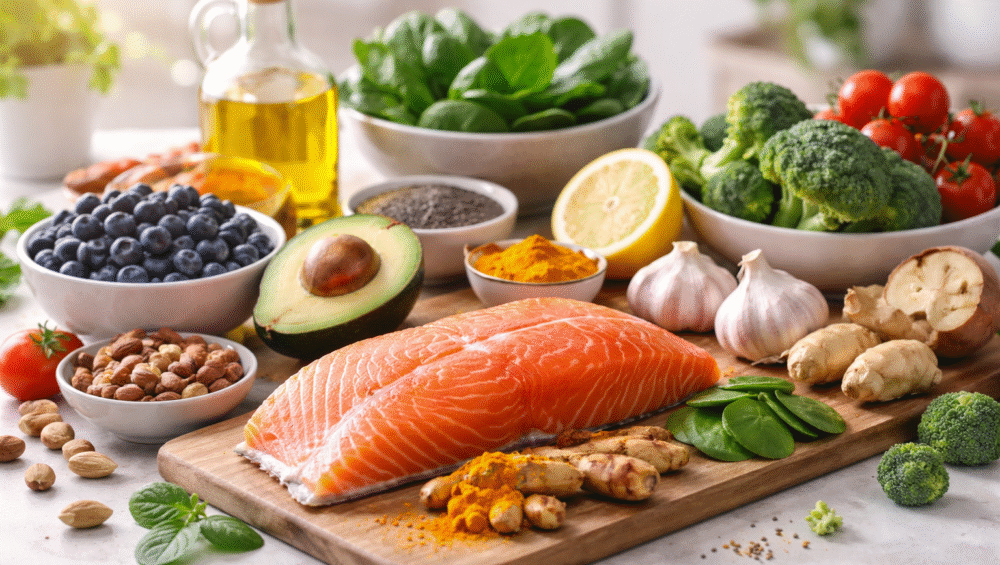
  • Anti-inflammatory foods

Amvilab Recommendations

Heal the gut → glow on the outside.

Perimenopause & Menopause: Natural Ways to Support Mood, Weight & Sleep

Understanding the Transition

Perimenopause often begins in your late 30s or early 40s.

Symptoms can include:

  • Anxiety or irritability
  • Sleep issues
  • Weight gain
  • Hot flashes
  • Low energy
  • Mood fluctuations

Hormones shift — but support is available.

Why Symptoms Happen

  • Estrogen dominance
  • Low progesterone
  • Blood sugar instability
  • Inflammation
  • Cortisol spikes
  • Serotonin fluctuations

Hormones don’t operate alone—they depend on gut, brain, and metabolic health.

Natural Ways to Support the Transition

  • Curcumin for inflammation
  • DIM for estrogen metabolism
  • Magnesium for calm and sleep
  • Omega-3 for mood
  • Probiotics for bloating
  • ACV+ for metabolism
  • Stressalab for cortisol balance

Amvilab Supports Women’s Wellness With:

Holistic, gentle, effective.

Shopping cart close